

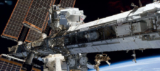
 Read article 'AMS measures antimatter excess in space'
AMS measures antimatter excess in space
The international team running the Alpha Magnetic Spectrometer (AMS) has announced the first results in its search for dark matter.
 Read article 'AMS measures antimatter excess in space'
The international team running the Alpha Magnetic Spectrometer (AMS) has announced the first results in its search for dark matter.
 Read article 'Planck reveals an almost perfect universe'
The long awaited results from ESA’s Planck mission, based on the most detailed observations to date of the cosmic microwave background (CMB), were released on 21 March. While the new data c...
Read article 'Supernova remnants accelerate cosmic rays'
A century after the discovery of cosmic rays, NASA’s Fermi Gamma-ray Space Telescope has gathered strong evidence that protons are, indeed, accelerated to high-energies by supernova remnants (SN...
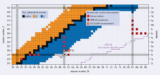 Read article 'Plumbing the depths of neutron stars'
New techniques developed by the ISOLTRAP collaboration are allowing investigations of a possible birthplace of the heavy elements.
Read article 'Pulsar exhibits puzzling switches in state'
Astronomers have detected simultaneous X-ray and radio-mode switches in co-ordinated observations of a pulsar. Pulsed X-ray emission is only present in states of weak radio emission. This indicates a ...
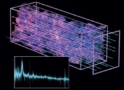 Read article 'BOSS gives clearer view of baryon oscillations'
In November the Baryon Oscillation Spectroscopic Survey (BOSS) released its second major result of 2012, using 48,000 quasars with redshifts (z) up to 3.5 as backlights to map intergalactic hydrogen ...
Read article 'Europe launches consortium for astroparticle physics'
At the end of November, European funding agencies for astroparticle physics launched a new sustainable entity, the Astroparticle Physics European Consortium.
Read article 'Hubble reveals earliest galaxies'
Although the Hubble Space Telescope is more than 22 years old, the regular upgrade of its instruments preserves intact its discovery potential as time goes by. Now, its quest to detect the most d...
Read article 'XMM-Newton discovers new source of cosmic rays'
Researchers using the European X-ray astronomy satellite XMM-Newton have discovered a new source of low-energy cosmic rays in the vicinity of the Arches cluster, near the centre of the Milky Way.
Read article 'Titanium illuminates the 1987 supernova'
The INTEGRAL gamma-ray satellite has detected the radioactive decay of an isotope of titanium, 44Ti, in the remnant of the nearby supernova SN 1987A. This observation confirms that 44Ti powers th...