

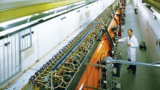
 Read article 'The tale of a billion-trillion protons'
The tale of a billion-trillion protons
Linac2, the machine that feeds CERN’s accelerator complex with protons, has entered a well-deserved retirement after 40 years of service.
 Read article 'The tale of a billion-trillion protons'
Linac2, the machine that feeds CERN’s accelerator complex with protons, has entered a well-deserved retirement after 40 years of service.
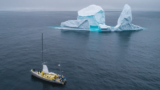 Read article 'Cosmic research poles apart'
Two independent groups are going to Earth’s extremes to make unprecedented measurements for physics, education and the environment.
 Read article 'Meet the Extremely Brilliant Source'
The first high-energy fourth-generation synchrotron X-ray source takes shape at the ESRF in Grenoble
 Read article 'Deep physics brought to life through photography'
the wining entries of the 2018 Global Physics Photowall competition
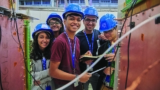 Read article 'Hands-on education at the frontiers of science'
Founded in 2014 at the time of CERN’s 60th birthday, the Beamline for Schools competition inspires and trains the youngest researchers in science.
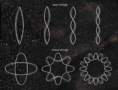 Read article 'The roots and fruits of string theory'
"People say that string theory doesn’t make predictions, but that’s simply not true."
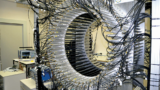 Read article 'J-PET’s plastic revolution'
A PET detector based on plastic scintillators offers whole-body imaging in addition to precision tests of fundamental symmetries.
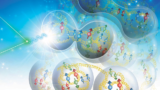 Read article 'Electron–ion collider on the horizon'
The National Academy of Sciences in the US finds a compelling scientific case for an advanced collider that would reveal how visible matter emerges from fundamental quarks and gluons.
 Read article 'Empowering Africa’s youth to shape its future'
The African Institute for Mathematical Sciences is part of a pan-African model for sustainable development.
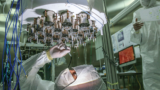 Read article 'Defeating the background in the search for dark matter'
A global effort is under way to carry out a complete search for high-mass dark-matter particles using an experiment called DarkSide-20k.