



Europe’s foremost particle-physics laboratory, CERN was established near Geneva in 1954 to stop the brain drain to the US that had begun during the Second World War, and to provide a force for unity in post-war Europe. Alongside technological innovations such as the World Wide Web, its contributions to fundamental science include the discovery of the W and Z bosons, the determination of the number of light neutrino families and the discovery of direct CP violation. CERN’s Large Hadron Collider – the highest energy machine in the world – is in the middle of a programme of exploration that has already yielded the discovery of the Higgs boson.
Contact: cern.courier@cern.ch
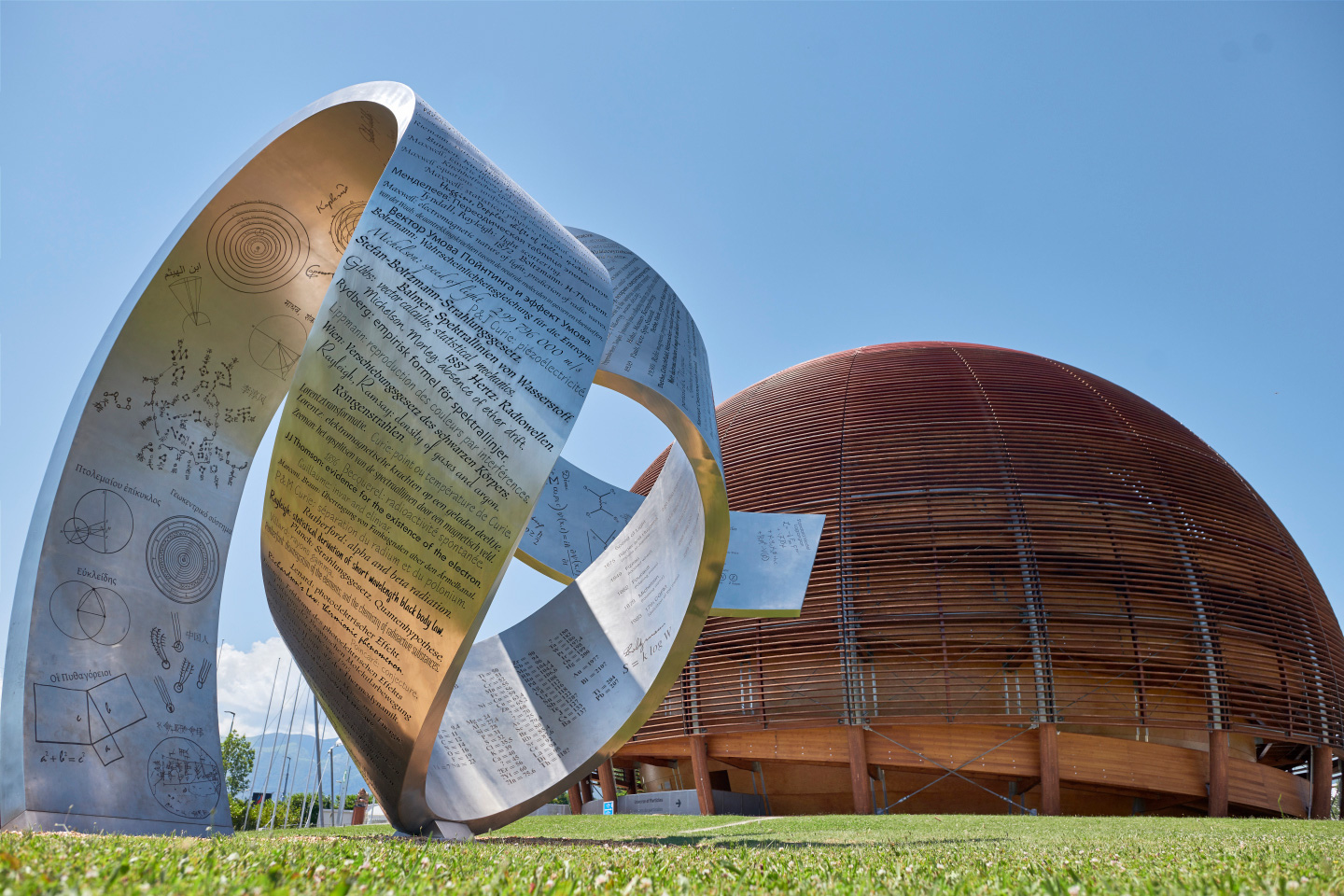
 Read article 'Welcome to the Science Gateway'
On 8 April, CERN unveiled plans for a major new facility for scientific education and outreach.
 Read article 'Assessing CERN’s impact on careers'
Results from a new survey show the impact of working at CERN on an individual’s career.
 Read article 'Fixed target, striking physics'
A strong tradition of innovation and ingenuity shows that, for CERN’s North Area, life really does begin at 40.
 Read article 'CERN’s ultimate act of openness'
The seed that led CERN to relinquish ownership of the web in 1993 was planted when the Organization formally came into being.
 Read article 'The tale of a billion-trillion protons'
Linac2, the machine that feeds CERN’s accelerator complex with protons, has entered a well-deserved retirement after 40 years of service.
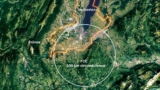 Read article 'CERN thinks bigger'
The Future Circular Collider study would see a 100 km-circumference tunnel built at CERN to host post-LHC colliders.
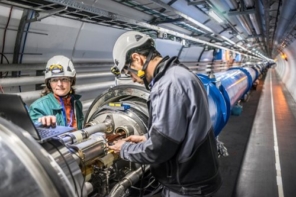 Read about 'Find out more about jobs at CERN'
Explore CERN’s employer profile and see the latest vacancies
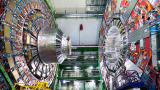 Read article 'CMS observes top–antitop excess'
The signal could be caused by a quasi-bound top–antitop meson commonly called "toponium".
 Read article 'Educational accelerator open to the public'
What better way to communicate accelerator physics to the public than using a functioning particle accelerator?
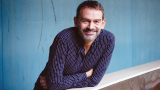 Read article 'Game on for physicists'
Raphael Granier de Cassagnac discusses opportunities for particle physicists in the gaming industry.
 Read article 'Encounters with artists'
Over the past 10 years, Mónica Bello facilitated hundreds of encounters between artists and scientists as curator of the Arts at CERN programme.
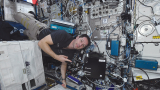 Read article 'CERN and ESA: a decade of innovation'
Enrico Chesta, Véronique Ferlet-Cavrois and Markus Brugger highlight seven ways CERN and ESA are working together to further fundamental exploration and innovation in space techno...
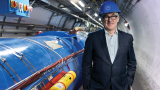 Read article 'A word with CERN’s next Director-General'
Mark Thomson, CERN's Director General designate for 2025, talks to the Courier about the future of particle physics.
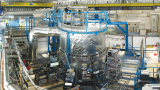 Read article 'CLOUD explains Amazon aerosols'
The CLOUD collaboration at CERN has revealed a new source of atmospheric aerosol particles that could help scientists to refine climate models.
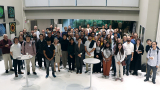 Read article 'Painting Higgs’ portrait in Paris'
The 14th Higgs Hunting workshop deciphered the latest results from the ATLAS and CMS experiments.
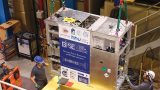 Read article 'Trial trap on a truck'
CERN'S BASE-STEP experiment has taken the first step in testing the world's most compact antimatter trap.
 Read article 'AI treatments for stroke survivors'
Data on strokes is plentiful but fragmented, making it difficult to exploit in data-driven treatment strategies.
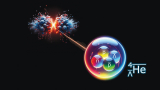 Read article 'First signs of antihyperhelium-4'
Hypernuclei remain a source of fascination due to their rarity in nature and the challenge of creating and studying them in the lab.
 Read article 'An obligation to engage'
As the CERN & Society Foundation turns 10, founding Director-General Rolf-Dieter Heuer argues that physicists have a duty to promote curiosity and evidence-based critical thinking.