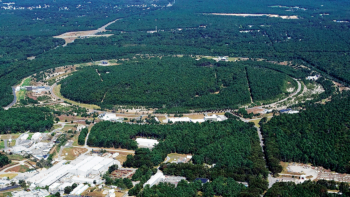

 Read article 'Exotic flavours at the FCC'
Exotic flavours at the FCC
Intriguing hints of deviations from the Standard Model in the flavour sector point towards new physics accessible at a Future Circular Collider.
 Read article 'Exotic flavours at the FCC'
Intriguing hints of deviations from the Standard Model in the flavour sector point towards new physics accessible at a Future Circular Collider.
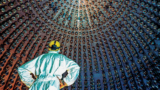 Read article 'How the Sun and stars shine'
Precise measurements of solar neutrinos have enabled the Borexino experiment to definitively observe the two main fusion reactions in stars.
 Read article 'Linacs to narrow radiotherapy gap'
Technology originally developed for high-energy physics is being used to develop a novel medical linear accelerator for radiotherapy in low- and middle-income countries.
 Read article 'Powering for a sustainable future'
Energy economy was the primary motivation for CERN to adopt the “Sirius” family of regenerative power converters for its transfer lines.
 Read article 'Counting collisions precisely at CMS'
Beyond the setting of new records, precise knowledge of the luminosity at particle colliders is vital for physics analyses.
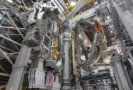 Read article 'ITER powers ahead'
Assembly of the tokamak that will confine a 150-million-degree plasma inside the ITER fusion experiment is under way.
 Read article 'The end of an era'
Steven Weinberg is part of the reduced rank of scientists who have radically changed the way we understand the universe and our place in it.
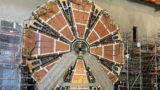 Read article 'Wheels in motion for ATLAS upgrade'
New muon end-cap wheels currently being installed in the ATLAS detector will provide precision tracking and triggering at high rates for Run 3 and beyond.
 Read article 'From sea quarks to sea shanties'
As TikTok dethrones Facebook as the most popular app, the Courier explores how high-energy physicists are taking advantage of the social-media phenomenon.
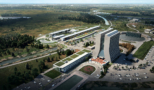 Read article 'PIP-II’s international engagement is the secret of success'
Fermilab’s Proton Improvement Plan II (PIP-II) will reshape the future of accelerator-based particle physics in the US.